

Tech Landscape #425
Meta Muse finds its Spark, Claude Mythos finds security holes, and I find that PixVerse video models are just OK
Hello!
This week I watched this incredible short film, Paper Smartphone, made with Seedance 2.0 by a team in China. The characters expressions are really lifelike, it’s astonishing to think how far this technology has come in such a short time.
The dynamic of the young child and the older shopkeeper reminded me of the Cadbury Mum’s Birthday ad (disclosure: made by my employer). And that made me think that there’s no chance that, here and now, AI could replace an ad like that. Not because of the technology — Paper Smartphone leaves me fairly sure you could get something very comparable using Seedance — but because of the way the audience would receive it. For many people, knowing it was made with AI would completely undercut the emotional punch.
I don’t think this will always be the case; probably nobody believed that CGI could make you cry until they watched the opening of Pixar’s Up. But we’re not at that point in the journey of AI films through our culture yet. They can move people to laughter, but not to tears.
Right, let’s get on with it. Hope you’re well!

Synthetic Audio-Visual
PixVerse released two new video models: V6 improves camera and character consistency and supports the generation of multi-shot clips up to 15 seconds length in 1080p with native audio; and C1 is “built for film production”, adding storyboard-guided generation.
I haven’t been impressed with PixVerse’s previous video models; this one is better, although still not top-tier. You can see in my tests ⬇️ of C1 that the level of detail is good, especially when using a keyframe image (clip 1), but it struggles with lip-syncing, and consistency in longer scenes, and falls apart when there’s a lot of complex motion (clip 4).
HeyGen launched Avatar V, offering improved lip-syncing, natural body movements, and higher-fidelity visual quality with a single coherent identity that can be transferred to multiple scenes, trained on as little as 15 seconds of source video. heygen.com/blog
I ran a quick test (which I’m not going to show you as I hadn’t combed my hair) and it seems very good for such a small amount of training data — although it did, weirdly, give me a Kiwi accent.
World Labs released two updated world models: Marble 1.1 brings enhanced lighting and detail, and Marble 1.1 Plus enables larger and more complex environments. instagram.com/theworldlabs
Definitely seems like an improvement over the first version, but right now I’m struggling to see the broader utility of image-to-splat beyond prototyping in 3D and posing virtual camera angles in image generation. Without physics, this isn’t a proper world model.
Lots of excited chatter this week as a new video model called (or codenamed?) Happy Horse suddenly appeared at the top of the leaderboards in blind testing, above Seedance 2.0. Its identity was a mystery for a while, but it was later confirmed that it’s from Alibaba — not the part of Alibaba that already makes the Wan models, but a different unit that’s being run by the former head of Kling. Nothing is properly known about it yet, but it’s interesting to note that Chinese companies completely dominate this space.
MiniMax’s Music 2.6 brings improved ambiance and structure, “intentional imperfection” for a more human sound, and a new song-covering tool that can create variations on an uploaded or generated track. minimax.io/news
Creative Tools
Stability AI launched Brand Studio, a creative production platform for generating and editing images at scale while maintaining visual consistency. stability.ai
This isn’t useless but is quite basic and entering into a very crowded market — and it’s based on the Stable Diffusion image model which is getting on a bit now, in AI terms.
Lovart’s Brand Kit can pull identity information from images and PDFs then apply them consistently to new generations. x.com/lovart_ai
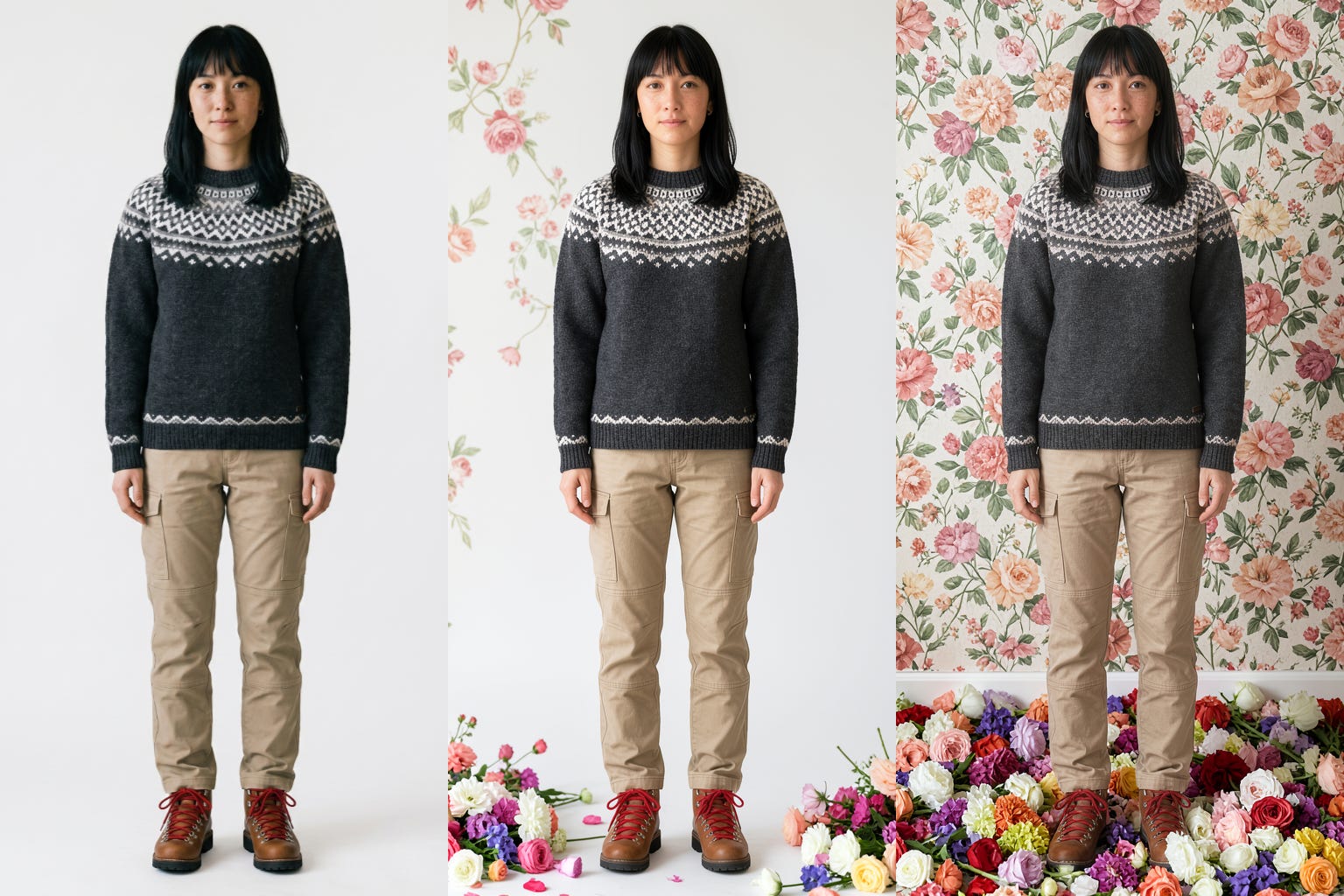
Adobe Firefly added two new image editing tools: Precision Flow uses a slider to control the strength of an edit, and AI Markup makes location-specific changes from a comment, note, or sketch. blog.adobe.com
These seem like exactly the type of tools that Adobe should concentrate on, leveraging its knowledge of what artists and designers want. They’re only available on personal accounts, not company (or at least, not mine). Here ⬇️ is a test of Precision Flow, showing the original image followed by an edit prompt at 0.2 and 1.0 strength.
XR (AR & VR)
Google updated Android XR with new immersive features, including automatic conversion of 2D content into 3D, the ability to pin apps to physical walls, and support for viewing real hands instead of digital outlines. blog.google
These are nice features, the problem is how to access them; Samsung’s Galaxy XR headset is the only platform currently running Android XR, and that’s still only available in a handful of countries (not including here in the UK).
Meta launched agentic AI dev tools for browser-based XR experiences, enabling creators and developers to more easily use its Immersive Web SDK. developers.meta.com
Niantic Spatial launched its Scaniverse 3D mapping platform for businesses, with an updated VPS (visual positioning system) for more precise spatial location. nianticspatial.com
Niantic’s pivot from Pokèmon Go to B2B robotics navigation is complete.
Social
YouTube Shorts lets users create photorealistic AI avatars of themselves, using a selfie and voice recording to generate prompt-based clips up to eight seconds long. 9to5google.com
Not rolled out here yet so I haven’t tried it.Instagram users can edit comments up to 15 minutes after posting. threads.com/@instagram
Assistants & Search
Meta released Muse Spark
The first model from Meta Superintelligence Labs is a multimodal LLM that features enhanced reasoning, visual perception, and subagent capabilities for parallel handling of complex tasks. It’s already available in the Meta AI mobile and Web apps, and coming to more Meta platforms soon.
about.fb.com/news/2026/04/introducing-muse-spark-meta-superintelligence-labs/
It seems… fine. IDK how to evaluate new LLMs. It did everything I asked it to and did it reasonably quickly. Note: the ‘family name’ of the models is Muse, and this version is Spark; like Claude and Opus, Sonnet, etc.
Google introduced notebooks in the Gemini app, a project management feature that syncs with NotebookLM to organise chats and files into personal knowledge bases. blog.google
This hasn’t rolled out for me to try yet but project-based organisation is something that the Gemini app is sorely lacking, and bringing the power of NotebookLM into it more directly makes a lot of sense. Notable in the announcement: knowledge bases will be “shared across Google products, starting in Gemini” (emphasis mine).
Anthropic made Cowork available to all paid plans and added Enterprise tools for large teams including access controls, spend limits, and usage analytics. claude.com
Genspark launched AI Workspace 4.0, adding a Genspark Claw native Desktop client that can control a local machine, plugins for Microsoft Office, live translation and meeting notes, and more. genspark.ai
I’ve noted before [TL 421 et al] that we’re in a new era of software influenced by OpenClaw, and this is a further example.Perplexity Pro users in the US can now link their bank accounts (via the financial network Plaid) to get a comprehensive view of their personal finances and ask specific questions about spending, net worth, and financial trends. perplexity.ai
This week also saw the launch of the new Gemini-powered Google Finance. The financial sector is going to be hugely shaken up by AI.
Also of note this week: Anthropic announced the new super-powerful Claude Mythos, which is (reportedly) incredibly good at code; too good.
Mythos Preview has already found thousands of high-severity vulnerabilities, including some in every major operating system and web browser.
For this reason they’re making it exclusively available to trusted security researchers through a cybersecurity initiative called Project Glasswing ahead of a public release.
Of course, we’ve heard this “too dangerous” rhetoric before. But should it turn out to be more than just alarmism this time, this and Google’s recent deadline of 2029 for today’s encryption techniques to be obsoleted by quantum computing indicate we‘re at the cusp of a change.